Top 10 Benefits of 120 240 Split Phase Inverters?
In the world of renewable energy, the 120 240 Split Phase Inverter is gaining significant attention. Industry expert Dr. Emily Chen once stated, "The 120 240 Split Phase Inverter revolutionizes how we manage electrical loads in homes." This inverter system provides a seamless way to utilize both residential and commercial applications.
One key advantage of the 120 240 Split Phase Inverter is improved energy efficiency. It allows for better balance between power consumption and generation, reducing waste. Homeowners can enjoy lower energy bills while contributing to environmental sustainability. However, these systems can be complicated to install and may require professional assistance.
Another benefit includes versatility in energy sources. Users can integrate solar panels or other renewable options effortlessly. Yet, proper setup and configuration are crucial to maximize performance. Awareness of potential pitfalls can lead to better decisions. The 120 240 Split Phase Inverter holds great promise but needs thorough understanding and planning for effective usage.
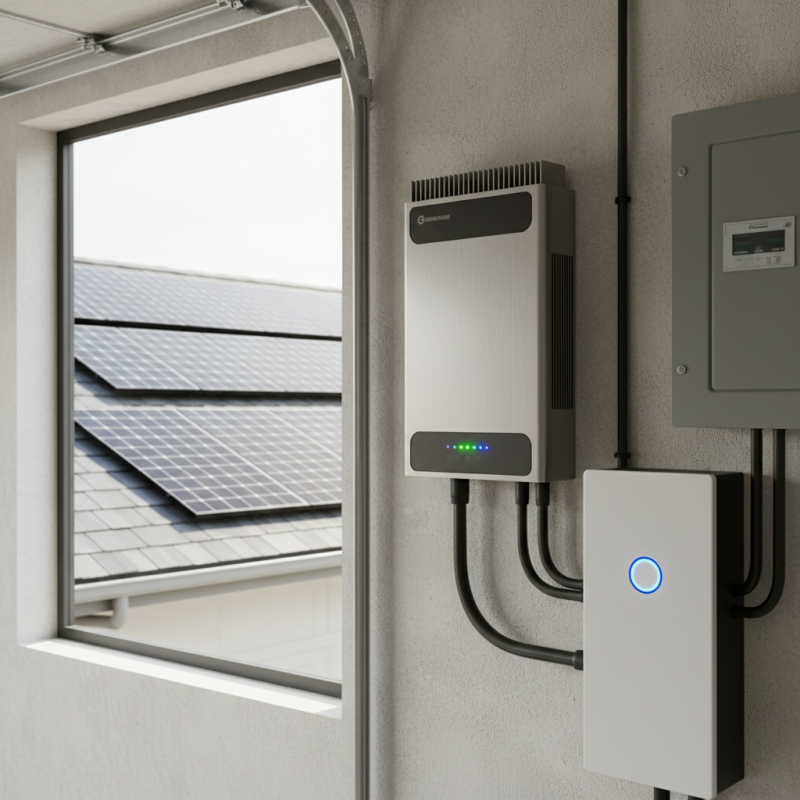
Understanding Split Phase Inverters: An Overview
Understanding split phase inverters is crucial for modern electrical systems. These inverters are designed to convert direct current (DC) to alternating current (AC) while using a split-phase configuration. This design allows the inverter to produce two separate AC outputs that are 180 degrees out of phase. This feature is key in many applications, especially in residential settings where 120V and 240V are common.
These inverters help in maximizing energy efficiency. By tapping into both voltages, they can power a wider range of appliances. This flexibility supports various household needs, from small devices to high-power equipment. Moreover, split phase inverters can be integrated smoothly with renewable energy sources, enhancing sustainability. However, users must be cautious when selecting components. Failure to match the inverter with the voltage and power requirements can lead to system inefficiencies. Some may find installation complex, and the learning curve can feel steep. It is vital to understand how to utilize these systems effectively.
Top 10 Benefits of 120/240 Split Phase Inverters
| Benefit |
Description |
| Efficiency |
Split phase inverters can provide higher efficiency by optimizing the energy conversion process. |
| Versatility |
They support various applications, including residential and commercial setups. |
| Cost-Effective |
Lower installation and operational costs compared to traditional inverters. |
| Dual Voltage Output |
Provides both 120V and 240V for different appliances simultaneously. |
| Simplified Wiring |
Easier wiring configurations reduce complexity for installation. |
| Compact Design |
Space-saving design suitable for limited installation areas. |
| Improved Load Management |
Better distribution of electrical loads, improving system reliability. |
| Flexible Integration |
Can easily integrate with renewable energy systems like solar panels. |
| Enhanced Safety Features |
Built-in safety mechanisms to prevent overload and short circuits. |
| Longer Lifespan |
Durable components lead to a longer operational lifespan with less maintenance. |
Key Advantages of 120 240 Split Phase Inverters
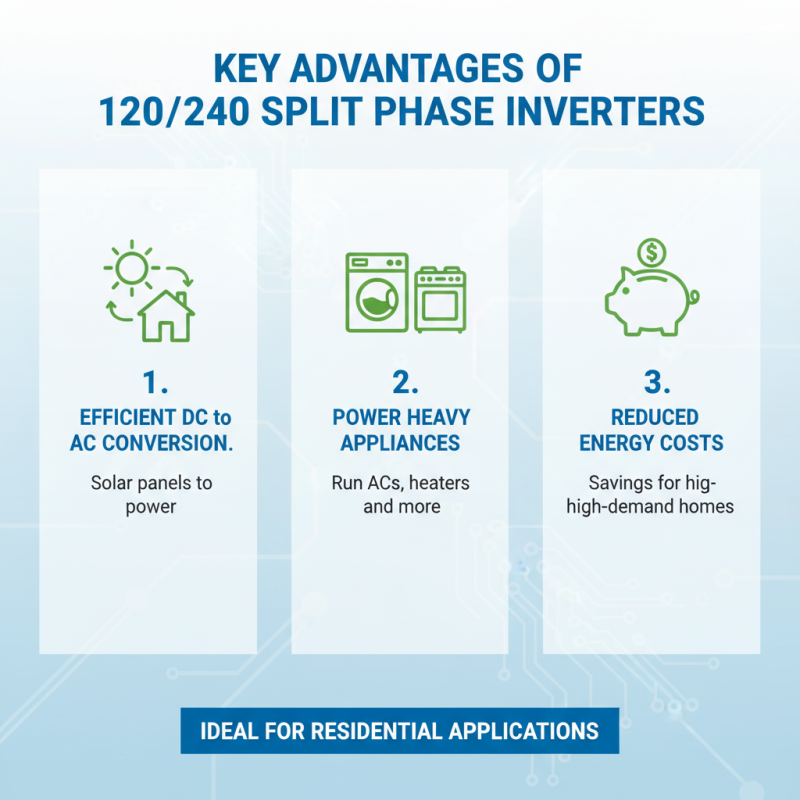
The 120/240 split phase inverters offer significant advantages, especially for residential applications. These inverters efficiently convert DC from solar panels into AC power. This capability allows homeowners to run heavy appliances without any hassle. By using split phase systems, users can effectively reduce their energy costs. This system is particularly beneficial in areas with high energy demands.
One key advantage is the adaptability of these inverters. They seamlessly integrate with existing home electrical systems. This integration helps maintain energy balance across different devices. However, it's essential to ensure proper installation for optimal performance. Poor installation can lead to inefficiencies, increasing long-term costs. People often overlook these details, thinking any inverter will do.
Reliability is another critical factor. Split phase inverters provide consistent power supply, even during peak loads. They can handle various voltage requirements, making them versatile. Still, users should consider regular maintenance to avoid potential breakdowns. Neglecting this can result in unexpected disruptions. Investing time in understanding these systems pays off in the long run.
How Split Phase Inverters Enhance Energy Efficiency
Split phase inverters are vital for improving energy efficiency in modern electrical systems. They allow both 120V and 240V circuits to operate simultaneously, making them versatile. This dual-voltage capability supports diverse applications, from residential to commercial power needs. By enhancing overall performance, these inverters provide users with reliable energy solutions.
Using 120/240 split phase inverters can lead to significant energy savings. They minimize energy loss during voltage conversion, allowing appliances to run more efficiently. Moreover, their design supports balanced loads, reducing strain on electrical systems. This can extend the lifespan of appliances and prevent unexpected breakdowns.
Tips: Regularly monitor your inverter’s performance. Ensure it is installed correctly to maximize efficiency. Consider consulting a professional to address any issues. Proper maintenance can greatly improve energy output, leading to lower utility bills. Small adjustments may yield significant benefits over time. Each user's experience may vary, so it’s essential to track your energy usage closely and adapt as needed.
Applications of 120 240 Split Phase Inverters in Modern Systems
120/240 split phase inverters play a significant role in modern electrical systems. Their applications span residential, commercial, and industrial settings. According to a recent industry report, split phase inverters are increasingly chosen for home solar energy systems. These inverters provide reliable power supply while accommodating a range of appliances.
In residential applications, they enable homeowners to effectively run both 120V and 240V devices. This flexibility supports essential equipment like water heaters and HVAC systems. A study by the Solar Energy Industries Association revealed that solar installations utilizing split phase inverters accounted for 30% of new systems in 2022. This trend reflects growing consumer demand for energy efficiency and convenience.
However, challenges exist. Proper installation is critical for optimum performance. Many users still face issues related to inverter sizing and grid compatibility. These can affect efficiency and energy savings. The ongoing evolution of the inverter technology continues to present opportunities for improvement and optimization in energy systems.
Top 10 Benefits of 120/240 Split Phase Inverters
Comparing Split Phase Inverters with Traditional Inverter Systems
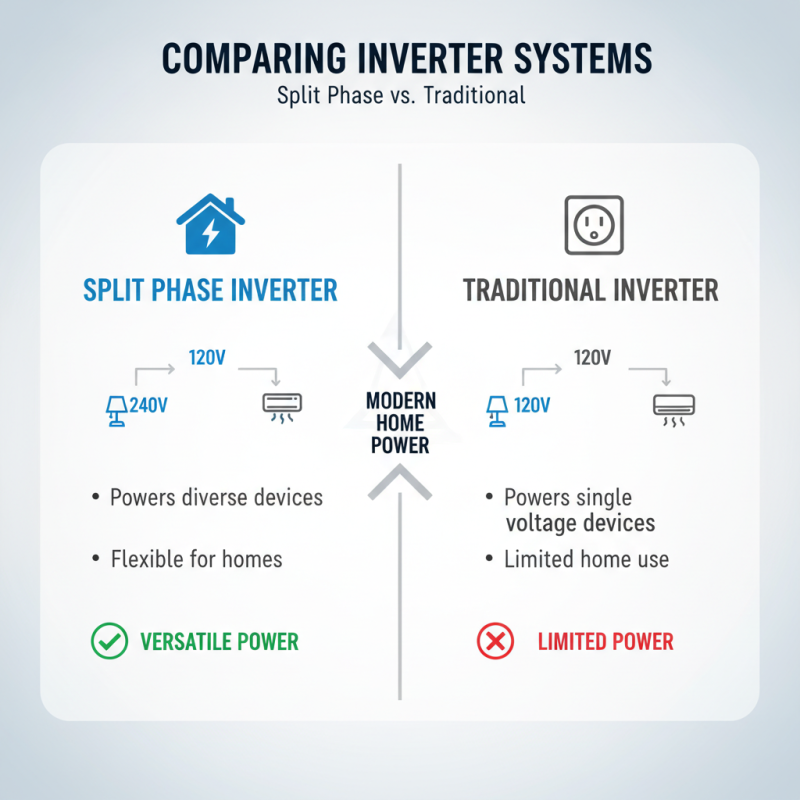
Split phase inverters stand out when compared to traditional inverter systems. They operate at both 120V and 240V, providing flexibility for various applications. This can be particularly beneficial for residential setups, where diverse power needs arise. Many households have devices that require different voltage levels. Split phase inverters meet these requirements seamlessly.
Moreover, split phase systems can improve energy efficiency. They reduce the chances of overloading circuits. With balanced power distribution, they prevent potential damage to appliances. Users often notice lower energy bills over time. Traditional inverter systems might not offer such efficiency. They can lead to wasted energy in certain configurations.
However, it's essential to consider installation complexity. Split phase inverters may require more intricate setups. Homeowners need to evaluate their situation carefully. There’s also a learning curve in understanding the system. Some users may find traditional inverters simpler. The choice ultimately depends on specific needs and preferences. Balancing efficiency with user experience is key.