Why Choose Low Frequency Hybrid Inverter for Your Power Needs?
In recent years, the demand for sustainable energy solutions has surged. According to the International Energy Agency, solar energy installations increased by 18% in 2021 alone. Among various technologies, the Low Frequency Hybrid Inverter stands out. This type of inverter proves crucial for those seeking reliable power management.
The Low Frequency Hybrid Inverter combines conventional and renewable energy sources, providing flexibility and efficiency. Reports suggest these inverters enhance battery life by managing charging cycles effectively. They adapt well to diverse power needs, ensuring a steady energy supply in fluctuating conditions. The global market for hybrid inverters is projected to grow at a CAGR of 10% between 2020 and 2025, reflecting rising interest.
Despite these advantages, potential buyers should consider their specific requirements. Not every application requires a Low Frequency Hybrid Inverter. They may not be the best fit for all energy demands. Assessing the unique aspects of your power needs is essential for making the most informed decision. Understanding these details can offer a reliable path to increased energy independence.

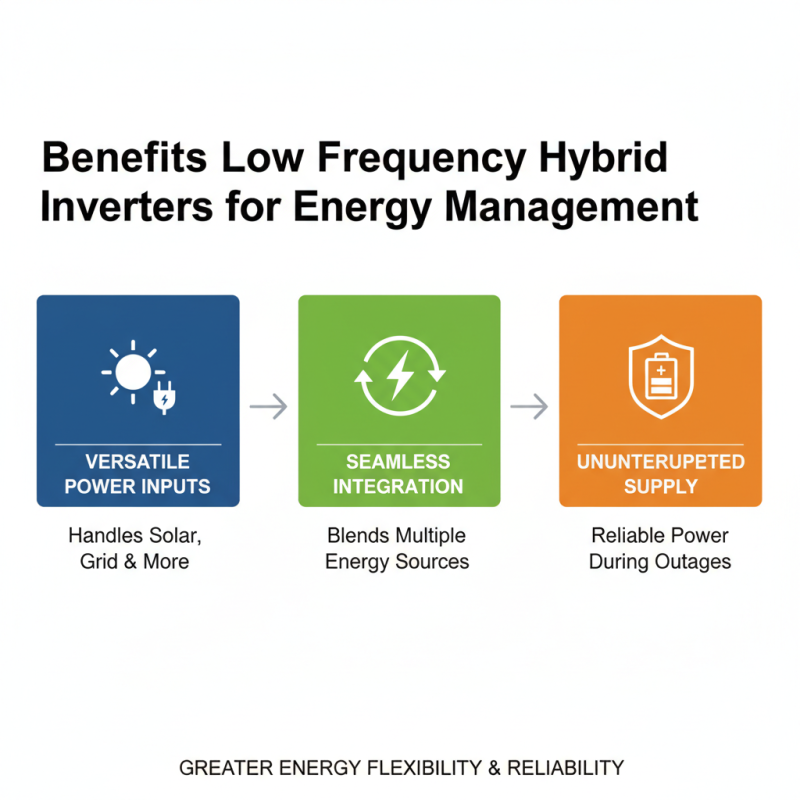
Benefits of Low Frequency Hybrid Inverters for Energy Management
Low frequency hybrid inverters provide unique advantages for energy management. They excel in handling various power inputs. These inverters integrate different sources, like solar and grid power, offering greater flexibility. This ensures continuous energy supply even during outages.
One significant benefit is their efficiency in energy conversion. They can operate effectively in low light conditions. This feature maximizes solar energy usage, especially in cloudy regions. Homeowners can save on energy costs while maintaining a reliable energy source. Additionally, their ability to store energy for later use enhances energy independence.
Tips: Look for inverters with user-friendly monitoring systems. This allows real-time tracking of energy usage. Regularly check battery performance to avoid unexpected power loss.
Despite these advantages, low frequency hybrid inverters may require more space for installation. Additionally, they can be more expensive upfront. However, these costs often balance out over time through savings on energy bills.
How Low Frequency Hybrid Inverters Work in Power Systems
Low frequency hybrid inverters play a crucial role in modern power systems. They combine multiple energy sources, optimizing their use. These inverters convert DC power to AC power while managing battery storage. They can integrate renewable energy sources like solar with conventional grids. This feature enhances energy efficiency and reduces dependence on fossil fuels.
Research indicates that low frequency hybrid inverters improve overall system reliability. A 2022 report by the International Renewable Energy Agency states that these inverters can reduce energy losses by up to 30%. They are particularly valuable in off-grid solar applications. However, initial costs can be high. The long-term savings often outweigh these upfront expenses. Potential users should consider maintenance needs and technical support when selecting devices.
Users may encounter challenges with installation complexity. Ensuring compatibility with existing systems requires careful planning. Experts recommend consulting professionals for optimal setup. Additionally, as technology evolves, continuous learning is necessary. Staying updated with industry standards is essential for maximizing the benefits of low frequency hybrid inverters.
Why Choose Low Frequency Hybrid Inverter for Your Power Needs?
| Feature |
Low Frequency Hybrid Inverter |
Standard Inverter |
| Operating Frequency |
Low Frequency (Typically < 100 Hz) |
High Frequency (Typically > 100 Hz) |
| Efficiency |
Higher Efficiency in Heavy Loads |
Variable Efficiency with Load |
| Power Output |
Suitable for Heavy Machinery |
Suitable for Light Electronics |
| Cost |
Generally Higher Initial Investment |
Lower Initial Cost |
| Durability |
More Robust for Industrial Use |
Less Durable |
| Type of Loads |
Capable of Handling Inductive Loads |
Best for Resistive Loads |
| Maintenance |
Requires Less Frequent Maintenance |
May Require More Regular Maintenance |
Cost-Effectiveness of Low Frequency Hybrid Inverters Compared to Alternatives
Low frequency hybrid inverters are gaining popularity for their impressive cost-effectiveness. According to a study by the International Renewable Energy Agency, these inverters can reduce energy costs by up to 30% compared to traditional systems. This significant savings stems from their ability to efficiently integrate renewable energy sources, minimizing reliance on grid power.
Moreover, low frequency hybrid inverters have a longer lifespan, often exceeding 15 years with proper maintenance. This longevity reduces the need for frequent replacements. A case study indicated that users typically save around $1,000 over the lifetime of the inverter compared to high frequency options. Their robust design can handle a variety of loads, which adds to their versatility and lowers operational costs.
Tip: Perform regular maintenance checks to ensure the longevity of your inverter. Keep the unit dust-free and ensure proper ventilation.
Still, some may find these inverters less suitable for high-demand applications. The initial investment may seem higher than traditional options, requiring careful financial planning. Users should weigh their energy needs against potential future costs. A thorough analysis can help in making informed choices.
Tip: Evaluate your energy consumption patterns. A detailed understanding can guide you to the most cost-effective solution for your needs.
Applications and Use Cases of Low Frequency Hybrid Inverters
Low frequency hybrid inverters offer a versatile solution for various applications. For off-grid systems, these inverters efficiently manage energy from solar panels and batteries. They are particularly beneficial in rural settings where grid access is limited. Homeowners can rely on them for consistent power supply during outages.
In industrial applications, low frequency hybrid inverters can support heavy machinery. Their ability to handle high inrush currents makes them suitable for factories and workshops. In addition, these inverters can operate in harsh environments. However, they may require regular maintenance to ensure optimal performance. Users should anticipate the potential for wear and tear over time.
In commercial setups, they enhance energy efficiency. Businesses can reduce electricity costs by utilizing stored energy during peak hours. This can lead to significant savings. That said, operators should closely monitor load requirements. Mismanagement may lead to inefficiencies. Embracing these technologies invites both benefits and challenges, inviting reflection on their long-term impact.
Applications and Use Cases of Low Frequency Hybrid Inverters
Considerations When Choosing a Low Frequency Hybrid Inverter
When considering a low frequency hybrid inverter, several factors come into play. First, think about your energy needs. Determine how much power you typically consume and whether your current infrastructure can support a low frequency inverter. These inverters are known for their efficiency and ability to handle larger loads. They can be great for homes or businesses with high energy demands.
Next, evaluate the inverter's features. Look for options like built-in solar charge controllers and grid-tie capabilities. These functionalities can enhance your energy management. However, it's crucial to weigh the cost against these features. Sometimes, enhanced features can lead to higher initial expenses.
Lastly, consider the installation process. It can be complex, requiring professional help. Assess your budget for installation alongside the inverter cost. Not every hybrid inverter suits every setting. Understanding your specific needs will help you make a better decision. A hasty choice can lead to future issues. Take your time and reflect on these aspects.