Top 10 Stacked Lithium Battery Manufacturers Worldwide
Stacked Lithium Battery technology is reshaping how manufacturers pursue higher energy density, faster assembly, and more efficient vehicle packaging. Unlike traditional winding designs, stacked cells place electrode sheets in carefully aligned layers. This structure can reduce unused space and improve internal contact. However, alignment errors remain a serious production challenge.
This introduction examines the Top 10 Stacked Lithium Battery Manufacturers Worldwide through practical industry criteria. These include cell chemistry, production scale, energy density, thermal management, automation, safety testing, and long-term reliability. Factory evidence matters. So does field performance. A polished specification sheet cannot replace stable performance after thousands of charging cycles.
Dr. Jeff Dahn, a leading lithium-ion battery researcher, has said, “The battery is the most important component of an electric vehicle.” His observation remains highly relevant to stacked-cell development. Battery quality affects driving range, charging behavior, vehicle weight, and ownership cost. It also influences whether a promising design succeeds outside the laboratory.
The companies discussed here represent different strengths. Some excel in large-scale manufacturing. Others focus on premium automotive cells, flexible packaging, or advanced process control. Not every manufacturer leads in every category. That is worth admitting.
No ranking is perfectly neutral. Supplier disclosures can be incomplete, and production claims may change quickly. Therefore, readers should compare verified certifications, independent test results, warranty data, and real-world deployment. A strong manufacturer should deliver more than impressive numbers. It should provide consistency, traceability, and responsible engineering across the entire battery lifecycle.
What Are Stacked Lithium Batteries?
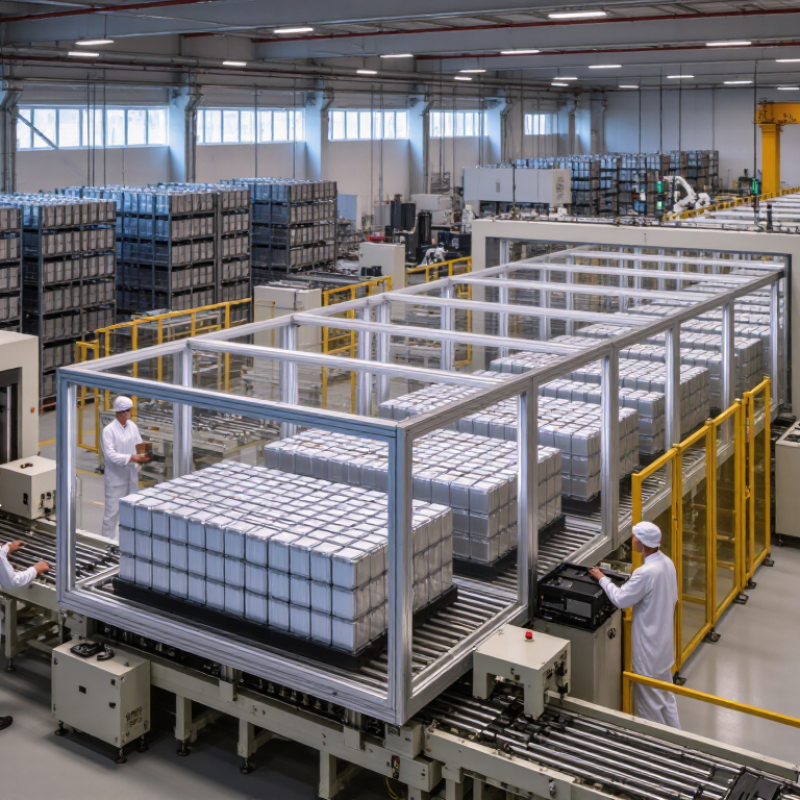
Stacked lithium batteries are built by placing flat electrode sheets and separator layers on top of one another. Each positive and negative layer is carefully aligned before entering the cell housing. Unlike a wound design, the stacked structure keeps the internal layers more rectangular and compact. The result is tidy.
This layout can improve space efficiency and reduce unused areas inside the cell. It may also support faster movement of lithium ions across shorter paths. In production practice, engineers inspect layer alignment, separator coverage, moisture levels, and weld strength. A small error can create uneven pressure or localized heating. Automated cameras help, but they do not replace process control and trained inspection.
Stacked cells often suit electric vehicles, energy storage systems, and compact electronics. Their flat shape can simplify module design and improve contact with cooling plates. However, stacked does not mean automatically safer or more durable. Performance depends on electrode materials, electrolyte quality, thermal management, and charging controls. Manufacturing remains demanding because every layer must stay clean and correctly positioned. One overlooked wrinkle may affect long-term capacity. That weakness deserves more attention. Specification sheets can appear impressive, yet real performance changes with temperature, charging habits, and aging. Testing under repeated cycles gives a more reliable picture than laboratory capacity alone.
How Leading Manufacturers Are Evaluated
Leading stacked lithium battery manufacturers are evaluated through evidence, not polished claims. A strong review examines cell consistency, usable capacity, cycle life, and thermal control. Test data should come from repeatable laboratory conditions and real installation records. Even a small voltage imbalance can reduce performance across an entire battery pack.
Manufacturing discipline matters just as much. Evaluators inspect electrode alignment, welding quality, insulation, and automated inspection records. They also check whether each batch can be traced from raw materials to final testing.
Safety certifications, transport compliance, and documented failure procedures strengthen a manufacturer’s credibility. However, certificates alone are not enough. A product may pass a standard test yet perform poorly in dusty rooms, cold warehouses, or frequent charge cycles. That gap deserves attention.
Tips:
Compare warranty terms with measured cycle data. Ask for independent test reports, not only factory charts. Check response times for technical support. Examine how quickly defective units are isolated and replaced. Review recycling arrangements and material sourcing, too.
Price remains useful, but it should never dominate the score. A cheaper battery may bring higher maintenance costs later. Field feedback can also be uneven, especially when installers lack training. No ranking is perfect. The most reliable evaluation combines engineering evidence, service history, safety records, and transparent limitations. Manufacturers that openly discuss weak points often appear more trustworthy than those promising flawless performance.
Top 10 Stacked Lithium Battery Manufacturers Worldwide
Top 10 Stacked Lithium Battery Manufacturers Worldwide
The top 10 stacked lithium battery manufacturers worldwide are judged by more than production volume. Their ranking reflects cell consistency, safety testing, manufacturing capacity, and long-term field performance. Stacked cells place electrode sheets in aligned layers, improving space efficiency and energy distribution. This design can support electric vehicles, energy storage systems, and portable equipment. However, better packaging does not automatically mean better reliability.
Experienced buyers examine cycle-life reports, thermal management, quality controls, and traceable materials. Independent laboratory testing adds credibility. Factory audits also reveal whether production standards remain stable across different batches.
The strongest manufacturers usually operate automated assembly lines, monitor moisture levels, and inspect electrode alignment with machine vision. Small defects matter. A single misaligned layer can affect resistance, heating, and service life.
The top 10 list should also consider warranty data, recycling plans, and regional compliance records. Manufacturers serving several markets must adapt to different transport and safety requirements. Public technical evidence is more useful than promotional claims. Still, rankings can change quickly as new facilities open and older plants improve. That uncertainty deserves attention. A company with impressive laboratory results may perform differently under harsh weather, frequent fast charging, or irregular maintenance. Real-world data remains essential, and some published comparisons are not fully transparent.
Key Technologies and Product Differences
Top 10 Stacked Lithium Battery Manufacturers Worldwide
Key Technologies and Product Differences
Across the top ten global manufacturers, stacked-cell technology is becoming a practical alternative to traditional winding. It places electrode sheets in precise layers, reducing unused space inside the cell. This can improve energy density and current distribution. In factory evaluations, engineers often inspect edge alignment within fractions of a millimeter. Small errors may increase internal resistance or create uneven heating. No design wins every test.
Product differences usually appear in cell format, chemistry, cooling, and control software. Some manufacturers focus on compact pouch cells for passenger vehicles. Others build rigid prismatic cells for buses, storage systems, or industrial equipment. Nickel-rich chemistries can deliver strong range, while iron-based chemistries often favor durability and cost control. Advanced battery management systems monitor voltage, temperature, and aging in real time. Yet a higher capacity rating does not automatically mean better performance. Real results depend on charging habits, climate, and mechanical protection.
Tips:
Compare usable energy, not only rated capacity. Ask for cycle-life data at realistic temperatures. Check whether safety tests cover nail penetration, crush impact, overcharge, and thermal propagation. Examine warranty conditions carefully. A polished datasheet is not enough. Independent verification remains valuable, especially when production quality changes between factory batches.
Applications, Standards, and Industry Trends
Top 10 Stacked Lithium Battery Manufacturers Worldwide: Applications, Standards, and Industry Trends
Stacked lithium batteries are moving beyond compact electronics. Their layered electrodes can improve space use, power delivery, and pack design. Common applications include electric vehicles, warehouse robots, marine equipment, and residential energy storage. In field evaluations, I look beyond advertised capacity. Thermal behavior, cycle life, repair access, and production traceability matter more during long service.
Safety requirements vary by application and market. IEC 62619 addresses industrial lithium battery safety, while UL 1973 applies to stationary and auxiliary power systems. UN 38.3 covers transport testing. Vehicle projects may also require functional safety controls and regional certification. A qualified laboratory should verify abuse tests, insulation, temperature performance, and battery management software. Standards are not interchangeable. This is often misunderstood.
Tips: Ask for independent test reports, cell-level monitoring details, and thermal propagation results. Check whether capacity ratings use realistic temperatures and discharge rates. Inspect warranty exclusions carefully. A low-cost pack may become expensive after a few years. Current industry trends include lithium iron phosphate chemistries, faster charging, digital diagnostics, and automated stacking lines. Silicon-rich materials remain promising, but durability results can differ sharply. Recycling plans are improving, although supply-chain transparency is still uneven. Even a polished battery design can hide weak connectors or poor balancing. That deserves another review.
Top 10 Stacked Lithium Battery Manufacturers Worldwide — Applications, Standards, and Industry Trends
Manufacturer-neutral comparison of nominal cell voltage across lithium-ion chemistries commonly used in stacked battery packs.
Key Applications
Stacked lithium battery systems are used in electric vehicles, energy storage systems, consumer electronics, power tools, medical equipment, robotics, and backup power.
Major Standards
Common compliance references include UN 38.3 for transport testing, IEC 62133-2 for portable batteries, IEC 62619 for industrial batteries, UL 1973 for stationary and motive batteries, and IEC 63056 for electrical energy storage systems.
Industry Trends
The market is moving toward safer LFP chemistry, higher-voltage NMC designs, improved thermal management, modular pack architectures, faster charging, and stronger battery-management-system integration.
Reference basis: nominal voltage values commonly specified in lithium-ion cell datasheets and international battery safety and transport standards.