The 2026 Top Stacked Lithium Battery Suppliers Worldwide guide examines a fast-changing energy storage market. Stacked Lithium Battery designs place electrode sheets in aligned layers, reducing inactive space and improving internal consistency. This structure can support higher energy density, stronger packaging efficiency, and more stable production results. Yet performance depends on materials, cell dimensions, welding quality, thermal control, and testing discipline.
Dr. Jeff Dahn, a leading lithium-ion battery researcher, has said, “The battery is a very complicated device.” That observation remains highly relevant. A supplier may advertise impressive capacity, but real value appears under repeated cycling, temperature changes, vibration, and rapid charging. Buyers should examine verified test data, not only laboratory claims. Factory automation also matters. Precise stacking equipment can limit electrode misalignment and reduce microscopic defects.
Details reveal differences. A reliable manufacturer should explain cathode chemistry, separator design, formation procedures, safety controls, and traceability systems. It should also provide independent certifications and clear warranty conditions. These points are not exciting. They are essential.
The global supplier landscape is still uneven. Some companies offer excellent engineering but limited production scale. Others provide large capacity but weaker transparency. This guide compares both strengths and weaknesses across leading suppliers. It considers manufacturing experience, research capability, quality consistency, delivery reliability, and after-sales support. No ranking is perfect. Market conditions change quickly, and even established suppliers can face material shortages or process failures. Careful evaluation remains necessary before selecting a long-term battery partner.
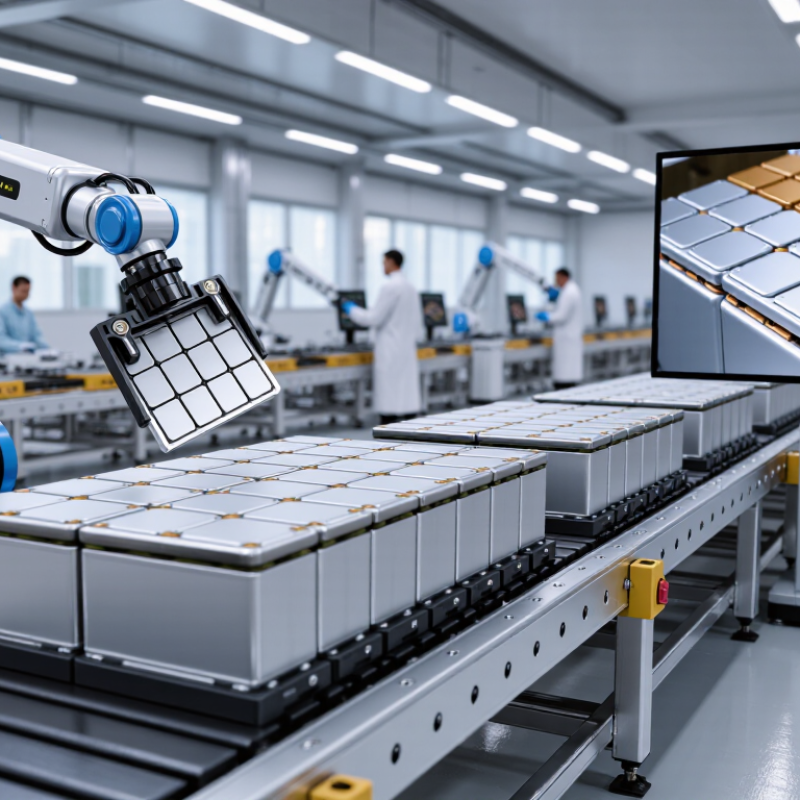
Stacked lithium batteries use flat electrode sheets arranged in repeated layers, rather than one long sheet rolled into a spiral. Each layer contains a cathode, separator, and anode. The separator prevents direct contact while allowing lithium ions to pass through the electrolyte. Thin metal collectors carry electrons to the external circuit.
During charging, lithium ions move from the cathode to the anode. During discharge, they travel back while electrons power a device through the outer circuit. The layers can connect in parallel for greater capacity or in series for higher voltage. A battery management system monitors cell voltage, temperature, and charging limits. Small sensors matter.
The stacked structure can shorten current paths and use space efficiently. It may also support flatter pouch or prismatic cell designs. In practical testing, however, performance depends on more than the layer count. Uneven pressure, misaligned sheets, or trapped gas can increase resistance and create hot spots. That risk is easy to underestimate.
Manufacturers must control moisture, coating thickness, tab welding, and compression during assembly. A tiny alignment error can affect a large cell. Thermal pathways also require careful design because dense layers may retain heat. Stacked construction is not automatically safer or longer-lasting. Its real advantage appears when material quality, mechanical support, electrical connections, and monitoring work together.
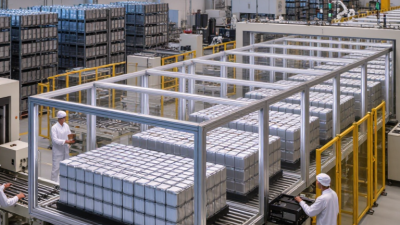
Modern stacked lithium battery systems depend on precise electrode architecture, not simply higher energy density. Cathode and anode sheets are cut into thin, repeatable pieces. They are aligned and stacked with micron-level control. A separator remains between every active layer. This geometry shortens current paths and can improve power delivery. It also exposes weaknesses. Small alignment errors may increase local heating and reduce usable capacity.
Automated vision systems inspect edges, tabs, and foreign particles during assembly. Laser welding creates low-resistance connections between multilayer current collectors. Some production lines use dry electrode coating to reduce solvent handling and energy demand. The process is promising, but surface uniformity remains difficult at high speed.
Compression control matters after stacking. Too little pressure can raise internal resistance. Too much pressure may damage the separator or limit expansion. Experienced engineers therefore tune pressure, humidity, and coating thickness together.
A battery management system monitors voltage, temperature, and imbalance across cell groups. Distributed sensors can identify abnormal heating before it spreads through the pack. Cooling plates, thermal interface materials, and vent paths support safer heat removal. Fire-resistant barriers add another layer of protection. Manufacturers also use formation cycling and end-of-line testing to reveal early defects. Data traceability links each cell to its materials and process history. Yet no inspection system catches everything. Long-term aging under vibration, cold starts, and partial charging still deserves more field evidence.
Leading stacked lithium battery suppliers worldwide in 2026 are expected to compete through cell consistency, production scale, and verified safety systems. Stacked designs can improve space use and reduce internal resistance, but manufacturing accuracy remains critical. A slight alignment error may affect pressure distribution across the pack.
Reliable suppliers should provide traceable material records, documented quality controls, and independent test results. Look for evidence from pilot production, not only impressive laboratory figures. Factory visits can reveal practical details, such as clean assembly areas, automated stacking equipment, and careful electrode inspection. These observations often matter more than a polished sales presentation.
Regional leaders across East Asia, Europe, and North America are investing in high-throughput stacked cell lines. Their strongest facilities usually monitor moisture, weld strength, cell thickness, and thermal behavior continuously. They also support customization for electric vehicles, energy storage, and industrial equipment. Compliance with recognized transport and battery safety standards should be confirmed before purchasing.
No ranking stays perfect. A supplier may offer excellent energy density but limited after-sales support. Another may provide dependable service but higher costs. Buyers should compare warranty terms, production capacity, sample data, and recycling arrangements. Ask difficult questions early. Real performance can change between prototype batches and mass production, which remains an uncomfortable but important industry lesson.
Comparing stacked lithium battery suppliers requires more than reading energy-density figures. Ask how the cells are stacked, compressed, welded, and inspected during production. In supplier audits, I look for stable electrode alignment and clean insulation around every connection. Small gaps can create uneven pressure, heat, and shorter service life.
Request test data for cycle life, fast charging, low-temperature output, and thermal behavior. Check whether the results come from full battery packs or individual cells. The difference matters. A reliable supplier should provide capacity tolerances, safety test records, traceability codes, and clear warranty terms. Independent laboratory reports are stronger than colorful brochures.
Production capability also deserves close attention. Review sample consistency across several batches, not only one impressive prototype. Ask about incoming material checks, end-of-line testing, and failure analysis procedures. I would also inspect the battery management system, enclosure design, cooling path, and maintenance access. No comparison is perfect. Supplier communication can still reveal weaknesses. Slow answers, vague test conditions, or changing specifications should prompt deeper questions. A lower purchase price may hide higher integration costs, especially when field repairs require custom parts or repeated testing.
Stacked lithium batteries are moving from laboratory discussions into electric vehicles, grid storage, power tools, and medical equipment. In a stacked cell, electrode sheets are arranged layer by layer, rather than wound into a spiral. This geometry can shorten current paths and improve internal space. The International Energy Agency reported that global electric-car sales exceeded 17 million in 2024. It also estimated electric-vehicle battery demand surpassed 1 TWh. These figures support continued investment in compact cell designs.
The next challenge is less glamorous. Stacked structures require precise alignment, reliable tab connections, and consistent pressure control. A small manufacturing defect can affect several layers. In stationary storage, safety and cycle life often matter more than peak energy density. The IEA projects electric-vehicle battery demand could reach about 3 TWh by 2030, compared with roughly 750 GWh in 2023. Future suppliers will likely combine stacked formats with silicon-rich anodes, faster inspection systems, improved thermal sensors, and lower-waste production. Solid-state cells may eventually benefit from stacking, but commercial timelines remain uncertain. The promise is real, yet not complete.
Tips: Compare volumetric energy density, cycle retention, heat management, warranty testing, and repair procedures. Do not judge a cell by capacity alone. Ask for independent test data. A higher datasheet number may hide weaker performance in cold weather or repeated fast charging.
| Supplier Landscape by Region | Typical Stacked Cell Formats | Common Chemistries | Indicative Gravimetric Energy Density | Typical Cycle-Life Range | Primary Applications | Key Competitive Strengths | 2026–2030 Development Direction |
|---|---|---|---|---|---|---|---|
| East Asia High-volume integrated cell manufacturing |
Pouch Prismatic |
LFP NMC High-nickel NMC |
Approximately 150–300 Wh/kg at cell level, depending on chemistry and design | About 2,000–5,000 cycles for many commercial designs; application and operating conditions can significantly change results | Electric passenger vehicles, commercial vehicles, buses, energy-storage systems, power tools and consumer electronics | Large-scale production, mature supply chains, automated stacking, broad chemistry coverage and competitive manufacturing costs | Higher stacking speed, reduced inactive materials, improved thermal propagation control, silicon-containing anodes and greater use of recycled materials |
| Europe Localized automotive and stationary-storage supply |
Pouch Prismatic |
LFP NMC Emerging sodium-ion alternatives |
Approximately 140–280 Wh/kg for mainstream lithium-ion cells | About 2,000–4,000 cycles for many EV and stationary-storage products | Electric vehicles, grid storage, residential storage, industrial mobility and rail-related systems | Close integration with vehicle platforms, emphasis on traceability, recycling, carbon reporting and regulatory compliance | Regionalized production, lower-carbon manufacturing, battery-passport data, closed-loop recycling and advanced structural pack integration |
| North America Automotive, energy-storage and regional manufacturing programs |
Pouch Prismatic Large-format |
LFP NMC Nickel-rich chemistries |
Approximately 150–300 Wh/kg at cell level, with product-specific variation | About 1,500–4,000 cycles, depending on vehicle or storage duty cycle | Electric cars, electric trucks, stationary storage, data centers, backup power and specialty mobility | Strong demand from automotive and grid-storage markets, localized sourcing initiatives and advanced battery-management integration | Domestic supply-chain expansion, non-flammable electrolyte research, faster charging, pack-level repairability and stronger recycling infrastructure |
| South Asia Growing regional assembly and energy-storage ecosystem |
Pouch Prismatic Module-based |
LFP NMC Lithium titanate for selected high-power uses |
Approximately 130–250 Wh/kg for commonly deployed systems | About 2,000–5,000 cycles, particularly for LFP-based storage products | Two-wheelers, three-wheelers, buses, telecom backup, residential storage and distributed solar systems | Strong demand for cost-effective batteries, suitability for hot climates and growing local pack-integration capability | More local cell production, improved thermal management, standardized removable packs and wider deployment of solar-plus-storage systems |
| Southeast Asia Expansion of electronics, EV and energy-storage manufacturing |
Pouch Prismatic Cylindrical modules |
LFP NMC Lithium manganese-rich variants |
Approximately 140–280 Wh/kg depending on cell size and chemistry | About 2,000–4,000 cycles for many commercial applications | Electric motorcycles, passenger vehicles, consumer electronics, logistics vehicles and commercial storage | Access to electronics manufacturing networks, expanding EV demand and strategic location for regional supply chains | Greater local content, automated stacking lines, battery-swapping systems and stronger export-oriented production |
| Specialized high-performance suppliers Low-volume, high-value engineering focus |
Pouch Thin pouch Custom stacked modules |
High-nickel NMC NCA Lithium-metal research cells |
Approximately 220–350 Wh/kg for selected advanced lithium-ion designs; research cells may not represent mass-production performance | About 500–2,000 cycles for high-energy designs, with substantial variation by design and test protocol | Aerospace, drones, robotics, motorsports, defense-related systems and premium mobility | High specific energy, customized engineering, compact packaging and performance-focused thermal management | Silicon-dominant anodes, lithium-metal development, improved fast charging and better manufacturing yield at pilot scale |
| Stationary-storage specialists Safety, longevity and total cost of ownership focus |
Prismatic Pouch Containerized modules |
LFP Lithium titanate for high-cycle applications |
Approximately 120–220 Wh/kg at cell level | About 4,000–10,000 cycles for selected LFP and high-cycle designs | Grid balancing, renewable-energy integration, microgrids, commercial storage and backup power | Long service life, lower thermal-runaway risk than many nickel-rich designs, predictable maintenance and scalable system architecture | Long-duration storage, improved fire detection and suppression, digital battery diagnostics, second-life integration and lower levelized storage cost |
| Consumer-electronics specialists Compact form factor and high energy density |
Small pouch Stacked thin-cell |
LCO NMC High-energy hybrid cathode systems |
Approximately 180–300 Wh/kg for selected commercial small-format cells | About 500–1,500 cycles, depending on product category and charging conditions | Smartphones, tablets, laptops, wearables, handheld devices and portable power stations | Thin packaging, flexible dimensions, high volumetric energy density and rapid product customization | Faster charging, improved swelling control, higher silicon content, thinner separators and enhanced recycling compatibility |
| Commercial-vehicle and industrial suppliers Durability and high-power operation focus |
Prismatic Large pouch Heavy-duty modules |
LFP NMC Lithium titanate for rapid-charge fleets |
Approximately 130–260 Wh/kg | About 2,000–8,000 cycles, depending on chemistry and duty cycle | Electric buses, trucks, forklifts, warehouse vehicles, marine systems and automated guided vehicles | High power capability, robust mechanical design, fleet monitoring and suitability for frequent charging | Megawatt-scale charging, battery swapping, predictive maintenance, improved low-temperature performance and modular refurbishment |
| Recycling and circular-economy suppliers Material recovery and second-life integration |
Recovered cells Repurposed modules Recycled-material cells |
LFP NMC Mixed lithium-ion feedstock |
Varies according to remaining capacity, recovered materials and cell reconstruction method | Second-life systems commonly target an additional 5–15 years, subject to state of health and operating conditions | Stationary storage, low-power backup, training systems and material recovery | Reduced dependence on primary raw materials, lower waste volumes and improved lifecycle economics | Direct recycling, automated sorting, digital battery passports, higher recovery rates and integration with regional battery manufacturing |